
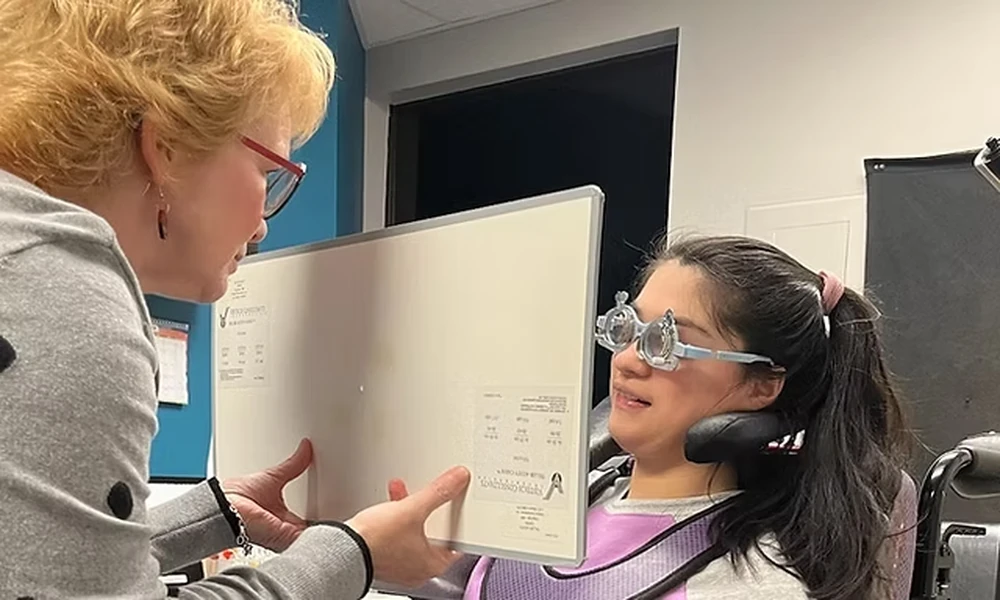
You might be feeling the shift in small, frustrating ways at first. Reading takes more effort, faces look less clear across the room, and even with updated glasses, things still do not seem sharp enough. That can be unsettling, especially when you are doing everything you are supposed to do and daily life still feels harder. If that sounds familiar, you are not overreacting. Low vision can affect how you move through your day, but the right Eye doctor in McLean can help you find tools, strategies, and support that make life more manageable.
In simple terms, low vision means vision loss that cannot be fully corrected with standard glasses, contact lenses, medicine, or surgery. That does not mean help has run out. It means the next step often involves a different kind of care, one focused on making the most of the vision you still have. That is where low vision care becomes so important.
What does an eye doctor actually do for people living with low vision?
When people hear “eye doctor,” they often think of eye exams and prescriptions. Those still matter, but for someone with low vision needs, the role grows wider. An eye doctor may first look for the cause of vision loss, such as macular degeneration, glaucoma, diabetic retinopathy, or other eye disease. Then, if the vision loss cannot be fully corrected, the focus shifts from “fixing” sight to helping you function better with the sight you have.
Because of this, care often includes a low vision evaluation, discussion of your daily goals, and referrals for rehabilitation services. You may talk about reading mail, cooking safely, using a phone, recognizing medication labels, or getting around outside the home. These are not small concerns. They shape independence, confidence, and quality of life.
The National Eye Institute explains that low vision support can include devices, training, and changes at home that help people continue everyday tasks. That matters, because many patients assume that if glasses cannot solve the problem, there is nothing else to try. In many cases, that is simply not true.
Why can low vision feel so overwhelming even when treatment has started?
One of the hardest parts of low vision is that it touches more than eyesight. It can affect work, driving, hobbies, and even how comfortable you feel asking for help. You may worry about becoming dependent on family, making mistakes with medications, or losing parts of your routine that once felt automatic. And if you have already seen several providers, you may feel worn down by appointments that gave you answers but not enough day to day relief.
So, where does that leave you? Usually at a point where medical care alone is not enough. You need practical support. An eye doctor who understands visual impairment support can help connect the dots between diagnosis and daily living. That may include magnifiers, stronger task lighting, contrast tips, large print materials, electronic reading devices, orientation training, or referral to occupational therapists and rehabilitation specialists.
The National Eye Institute also offers a helpful vision rehabilitation fact sheet that explains how rehabilitation helps people use remaining vision more effectively. For many patients, that kind of care is the turning point. The goal is not false hope. The goal is useful help.
How does low vision care compare with a standard eye exam?
A standard eye exam is still important, but it is not the same as care designed for people with lasting vision loss. If you are wondering whether it is worth asking for more specialized help, this comparison can make the difference clearer.
| Standard Eye Exam | Low Vision Evaluation |
|---|---|
| Checks eye health and updates glasses or contacts | Focuses on how to function better with reduced vision |
| Aims to correct vision as much as possible | Assesses what tasks are difficult, like reading or cooking |
| May diagnose eye disease | May recommend magnifiers, lighting changes, and adaptive devices |
| Usually brief and routine | Often more detailed and centered on daily life goals |
| Limited support for life after vision loss | May include referrals for rehab, mobility training, and home strategies |
For some people, the difference is immediate. Imagine someone who can no longer read bills even with new glasses. A routine exam may confirm the vision loss, but a low vision specialist may suggest a handheld video magnifier, brighter lighting, and a labeling system for medications. Same person, same eyes, very different outcome.
What practical steps can you take right now if you need help with visual impairment support?
1. Ask for a low vision evaluation.
If regular eye care is no longer meeting your needs, ask directly whether a low vision evaluation is appropriate. Use plain language. You can say that you are having trouble reading, managing household tasks, or getting around safely even with your current prescription. That helps the provider understand that function, not just diagnosis, is the issue.
2. Write down the tasks that have become difficult.
Before your appointment, make a simple list. Include things like reading labels, seeing steps, paying bills, or recognizing faces. This gives your eye doctor a clearer picture of where support is needed. It also keeps the visit focused on your real life, not just the eye chart.
3. Explore rehabilitation and community resources.
Medical treatment is only one piece of the puzzle. Rehabilitation services can teach safer and easier ways to do daily tasks. If you are a veteran, the VA offers blind and low vision rehabilitation services that may include training, devices, and support. Similar programs may also be available through hospitals, state agencies, and nonprofit groups.
Can an eye doctor really help you stay independent?
In many cases, yes. Not by promising perfect sight, and not by pretending the loss is easy, but by helping you build a realistic plan. That plan may involve medical treatment, adaptive tools, rehabilitation, and changes in your home or routine. It may also involve emotional adjustment, because losing visual ability can bring grief along with practical stress.
Vision rehabilitation services and skilled eye care work best when they are centered on what matters to you. Maybe that means reading again, moving more safely through your home, or keeping up with hobbies that make you feel like yourself. Those goals are worth naming, and they are worth support.
If low vision has started to change your daily life, do not assume you simply have to “live with it” without help. The right eye doctor can guide you toward tools and services that make life easier, safer, and more independent. Reach out and ask about low vision support at your next eye appointment.